
- Is There Really a “Best” Age for Orthodontic Treatment?
- Why Do Orthodontic Evaluations Start So Young?
- When Might Early Treatment Make Sense?
- When Do Most Kids Get Braces?
- When Can Kids or Teens Use Clear Aligners?
- Does Crowding Change the Timing?
- What If My Child's Teeth Are Already Very Crooked?
- Are Braces Better Than Aligners for Kids?
- Why Is Orthodontic Timing So Important?
- What Should Parents Do If They're Unsure?
Is There Really a “Best” Age for Orthodontic Treatment?
Not exactly. Two kids can be the same age and be at completely different stages of dental development. One 11-year-old may have nearly all of their permanent teeth, while another still has several baby teeth. One child may have a bite problem we want to address while they’re growing, while another simply needs more time before orthodontic treatment would be useful. That’s why we don’t recommend braces or aligners based on age alone. For many kids, comprehensive orthodontic treatment begins during the preteen or early teenage years. But there’s a difference between the best age to evaluate a child and the best age to actually treat them.
Why Do Orthodontic Evaluations Start So Young?
The American Association of Orthodontists recommends an orthodontic check-up no later than age seven. That surprises plenty of parents. Most seven-year-olds still have a lot of baby teeth, so braces probably aren’t what you had in mind. And usually, they’re not what we have in mind either. An early evaluation gives a children’s orthodontist in Bonner Springs an opportunity to see how permanent teeth are erupting and how the jaws and bite are developing. We can look for crowding, crossbites, unusual eruption patterns, and other concerns that may be easier to manage at a particular stage of growth. If everything looks good, we may simply monitor your child. An orthodontic evaluation doesn’t automatically turn into orthodontic treatment.
When Might Early Treatment Make Sense?
There are situations where waiting for every permanent tooth isn’t necessarily the best approach. Certain jaw-growth or bite problems may benefit from earlier attention. Significant crowding or permanent teeth that aren’t erupting normally can also give us a reason to consider treatment sooner. This type of treatment is sometimes called Phase 1 orthodontics. It generally focuses on a specific developing problem rather than completely straightening every tooth. As a kids orthodontist in Bonner Springs, we want to be selective about early treatment. Starting younger doesn’t automatically produce a better result. If we believe waiting is the better option, that’s what we’ll recommend. The goal is appropriate timing, not simply early timing.
When Do Most Kids Get Braces?
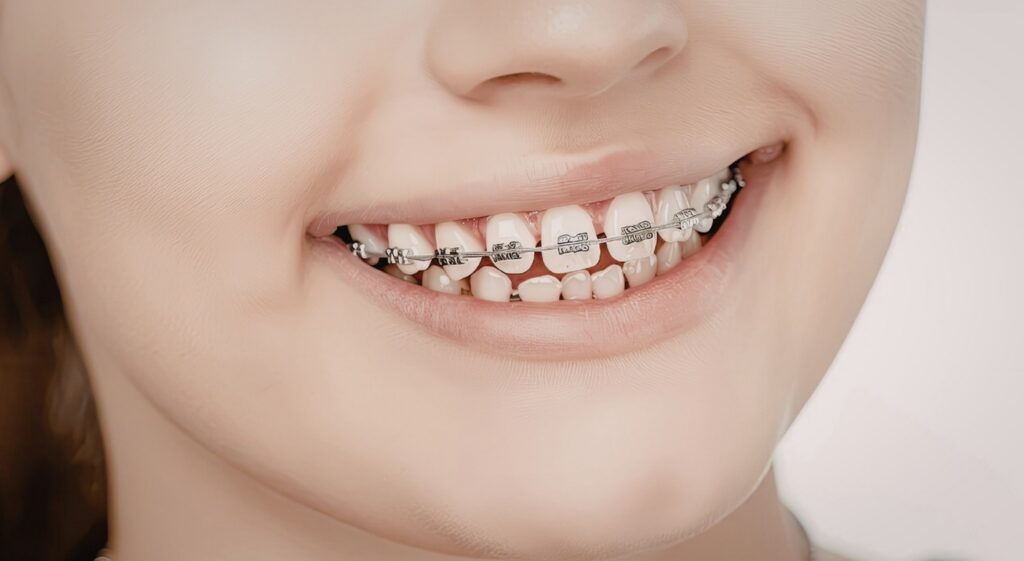
A lot of comprehensive orthodontic treatment takes place between roughly ages 10 and 14. By this stage, many permanent teeth have erupted, and there may still be useful jaw growth occurring. Braces can correct crowding, spacing, crooked teeth, and many bite problems. Because they’re attached to the teeth, they also work without a child having to remember to wear them every day. That’s worth considering. A responsible 13-year-old may do wonderfully with removable aligners. Another 13-year-old might lose an aligner before making it out of the school cafeteria. We know kids are different, and the best treatment plan has to work in real life, not just on paper.
When Can Kids or Teens Use Clear Aligners?
There isn’t one minimum age that automatically makes someone a good candidate for aligners. We look at dental development, the orthodontic problem, and whether the patient can handle the responsibility. Clear aligners have to be worn consistently and removed for eating and certain drinks. That means patients have to remember to put them back in afterward and keep track of them throughout the day. For the right patient, aligners can be a great option. A teen orthodontist in Bonner Springs can evaluate whether aligners are appropriate for the tooth movements your teenager needs and whether braces might provide an advantage instead. We don’t want to choose a treatment simply because one option is less noticeable. First, it needs to be capable of doing the job well.

Does Crowding Change the Timing?
It can. Crowding occurs when the teeth don’t have enough room to line up normally. You might notice permanent teeth overlapping, rotating, or erupting behind other teeth. When we evaluate a child as a crowded teeth orthodontist in Bonner Springs, we’re looking at more than what appears crooked today. We want to know how much space is available, which permanent teeth still need to erupt, and how continued growth could affect the situation. Mild crowding may simply need monitoring. More significant crowding can require a different approach. Seeing it early gives us time to make that distinction instead of waiting until the mouth becomes even more crowded.
What If My Child’s Teeth Are Already Very Crooked?
Crooked teeth are certainly one reason families come to see us, but appearance doesn’t tell us everything we need to know. Teeth can be rotated or angled because of crowding, eruption patterns, available space, or other factors. We also need to look at how the upper and lower teeth fit together. A crooked teeth orthodontist in Bonner Springs can evaluate the entire bite rather than focusing only on the teeth that look out of place. Sometimes parents are surprised when we recommend waiting. But if important permanent teeth still need to erupt, a little patience can make treatment planning much clearer.
Are Braces Better Than Aligners for Kids?
It depends on the child and the orthodontic problem. Braces are fixed to the teeth and can handle many types of tooth movement. Kids can’t forget to wear them, although they do need to be careful about oral hygiene and certain foods. Aligners are removable and discreet, which appeals to many older children and teenagers. They also make brushing and flossing easier because they can be removed. The tradeoff is that they only work when they’re being worn as directed. Neither option wins automatically. We look at the correction your child needs first. Then we can talk about which appropriate option fits their lifestyle and preferences.
Why Is Orthodontic Timing So Important?
Orthodontics is more than moving teeth until they look straight. We’re also working with the bite and, in growing children, changing jaws. Growth gives us opportunities that aren’t available in exactly the same way once someone reaches adulthood. That’s one reason we like to identify certain orthodontic problems before growth is finished. At the same time, starting too soon when there’s no clear benefit can mean spending more time in treatment than necessary. As a family orthodontist in Bonner Springs, we’re trying to find that middle ground: early enough to take advantage of development when it matters, but not so early that we’re treating something that would be better addressed later.
What Should Parents Do If They’re Unsure?
You don’t need to figure out whether your child needs braces before scheduling an orthodontic evaluation. That’s our job. Maybe you’ve noticed crowding. Maybe the bite looks unusual. Maybe your child’s dentist suggested an orthodontic check. Or perhaps your teenager has been asking about aligners because several friends have them. Those are all reasonable reasons to come in. At Starting Point Pediatric Dentistry & Orthodontics, we’ll look at your child’s teeth, bite, and development and explain what we see. If the time is right for braces or aligners, we’ll talk through the options. If waiting makes more sense, we’ll explain what we’re watching and when we’d like to check again. There isn’t one perfect birthday for orthodontic treatment. The best age is the age when your child’s development, orthodontic needs, and treatment goals line up. Working with a family orthodontist in Bonner Springs gives you the information you need to make that decision based on your child’s smile rather than a number on the calendar.

Are you considering choosing Starting Point Pediatric Dentistry & Orthodontics for your kiddo? Let’s face it, kids aren’t always thrilled about going to the dentist. That’s why we do everything we can to make it a good experience for both of you. No scary stuff. No rushed appointments. Just kind people, calm vibes, and care that actually makes sense.
When you’re ready, give us a ring at the closest location:
Kansas City: (913) 948-8688
Overland Park: (913) 553-2492
Leawood: (913) 491-5044
Or book online! We’ll help your kid feel comfortable, and make your life a little easier.

