
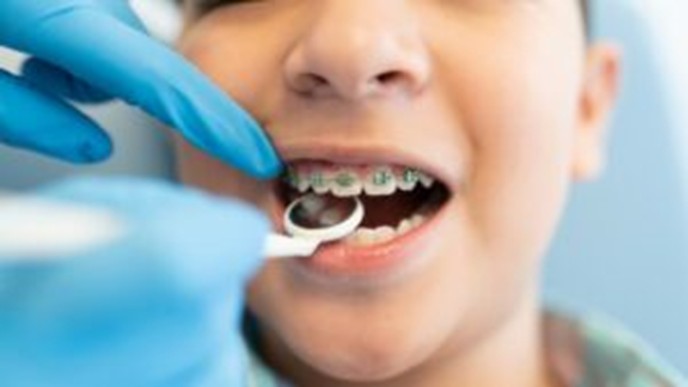
The more useful question is whether the tissue limits normal movement or contributes to a specific problem. A children’s dentist in The Legends may examine how the lip lifts, whether brushing is difficult, and whether the tissue pulls strongly against the gums. Age also changes the picture. The mouth grows, baby teeth are replaced, and the attachment may appear different over time. A gap between a young child’s front teeth can be normal and may narrow as additional permanent teeth erupt.
Possible Signs in Babies and Young Children
Feeding concerns often bring families to an evaluation. A baby may struggle to maintain a seal, tire during feeding, make clicking sounds, or take a long time to finish. The nursing parent may experience discomfort as well. These symptoms have many possible causes. Positioning, milk supply, bottle flow, muscle coordination, and other medical or developmental issues can produce similar difficulties. A lip tie should not be assumed to be the cause without a broader feeding assessment.
A lactation consultant, pediatrician, speech or feeding therapist, and dentist may each contribute useful information. The right combination depends on the child’s age and symptoms. In older children, parents may notice difficulty lifting the upper lip for brushing. Food and plaque may collect near the gumline. Some children report that the tissue feels tight or sore when they smile widely.
How Lip Tie in The Legends Is Evaluated
An evaluation begins with the problem the family is trying to solve. The provider asks about feeding, speech, cleaning, previous therapy, dental development, and discomfort. The examination then checks movement and tension rather than focusing only on where the tissue attaches. A kids dentist in The Legends may also study the gums and spacing between the front teeth. When a gap is the concern, timing matters. Treating the tissue too early may not close the space, and orthodontic care may still be needed later.
A lip tie in The Legends should be considered in the context of the entire mouth. The tongue, palate, jaw movement, bite, and muscle coordination may also affect the symptoms a family has noticed. Families should ask the provider to explain what functional restriction was found. It is reasonable to ask what could happen without treatment and whether therapy, observation, or another approach should be tried first.

The Difference Between Lip Tie and Tongue Tie
A lip tie involves tissue beneath the upper lip. A tongue tie in The Legends involves the tissue beneath the tongue. A child may have one, both, or neither. The two conditions can affect different movements. Restricted tongue mobility may influence feeding mechanics, speech sounds, oral cleaning, and the tongue’s resting position. Restricted lip movement may affect the ability to flange the lip, maintain a seal, or clean around the front teeth. Symptoms can overlap, which is why a careful functional examination matters. A visible tissue attachment does not prove that it is responsible for every feeding or speech concern.
Parents should be cautious about broad promises. Releasing tissue may help when the restriction has been properly identified, but it is not a universal solution for feeding, sleep, speech, or dental spacing.A frenectomy in The Legends is a procedure that releases or reshapes restrictive tissue. The provider may use surgical instruments or a dental laser, depending on training, the patient’s needs, and the treatment setting. Before recommending the procedure, the dental team should explain the goal. For one child, the goal may be improving lip movement during feeding. For another, it may be reducing tension near the gums or supporting a coordinated dental and orthodontic plan.
The procedure itself is only one part of care. Babies with feeding difficulties may need help learning a more effective pattern. Older children may work with a speech or feeding therapist when muscle coordination remains part of the concern. Ask about pain control, healing, eating afterward, follow-up appointments, and the signs of a complication. Families should receive clear instructions rather than relying on general advice found online.
Recovery and Follow-Up Care
Healing varies with the child’s age, the extent of the release, and the method used. Mild soreness, temporary feeding changes, or a small amount of spotting may occur. The provider should explain what is expected and what deserves a phone call. Follow the office’s instructions about cleaning and activity. Do not begin stretching exercises unless they have been specifically recommended and demonstrated for the child. Practices vary, and the plan should reflect the procedure that was actually performed.
Contact the provider about bleeding that does not stop, increasing swelling, fever, signs of dehydration, or pain that is not controlled as expected. Feeding difficulty that worsens rather than improves also deserves attention. Thoughtful pediatric dental Care The Legends includes checking whether the original functional goal is improving. Healing tissue may look different before it settles, so follow-up is more informative than judging the result from daily photographs.
Making a Decision Without Feeling Rushed
Parents deserve time to understand the recommendation. Ask which symptoms are linked to the restriction, what evidence supports treatment, and whether another professional should evaluate the child first. It may be appropriate to treat, monitor, or seek another opinion. The best choice depends on function, not pressure to act because a tissue attachment looks unusual. When lip tie in The Legends is causing a documented problem, coordinated care can give the family a practical plan. When function is normal, observation may be all that is needed.
FAQs
Does every visible lip tie need to be released?
No. Everyone has tissue connecting the lip and gums. Treatment is considered when that tissue creates a meaningful functional or dental concern.
Will releasing a lip tie automatically close a gap?
Usually not. Spacing can change as permanent teeth erupt, and orthodontic movement may be required. The timing of a release should be coordinated with the dental or orthodontic plan.
Who should evaluate a Lip Tie in The Legends?
A dentist with relevant experience can examine oral function. Depending on the symptoms, input from a pediatrician, lactation consultant, or speech and feeding therapist may also be useful.

Are you considering choosing Starting Point Pediatric Dentistry & Orthodontics for your kiddo? Let’s face it, kids aren’t always thrilled about going to the dentist. That’s why we do everything we can to make it a good experience for both of you. No scary stuff. No rushed appointments. Just kind people, calm vibes, and care that actually makes sense.
When you’re ready, give us a ring at the closest location:
Kansas City: (913) 948-8688
Overland Park: (913) 553-2492
Leawood: (913) 491-5044
Or book online! We’ll help your kid feel comfortable, and make your life a little easier.

